MARVEL Tōkon: Fighting Souls on PC: How 4v4 Team Battles Work in Marvel’s New Fighter
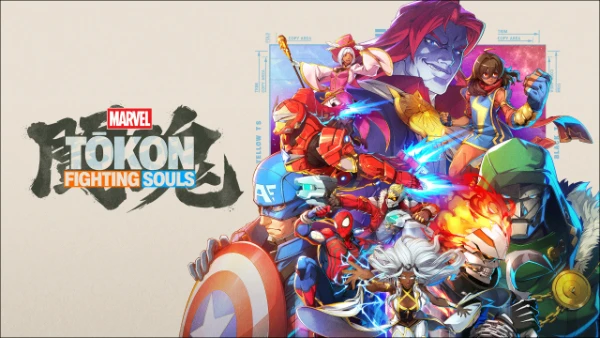
MARVEL Tōkon: Fighting Souls brings an unusual idea to the tag-fighting genre: instead of building a familiar two- or three-character squad, every player enters battle with four Marvel heroes or villains. Developed by Arc System Works in collaboration with PlayStation Studios and Marvel Games, the game was released for PC and PlayStation 5 on 6 August 2026. Its 4v4 format is more than a larger character-selection screen. Assists, switches, shared team resources and character combinations shape each fight, while the system is designed so that newcomers do not have to learn four complete move sets before they can start enjoying matches. On PC, players can choose from the same 20-character launch roster, play offline or online, use traditional or simplified inputs and experiment with teams that mix Avengers, X-Men, street-level heroes, cosmic characters and Marvel villains. Understanding how these four-character squads actually operate is the key to understanding what makes MARVEL Tōkon different from a conventional one-on-one fighter.
How 4v4 Battles Work in MARVEL Tōkon: Fighting Souls
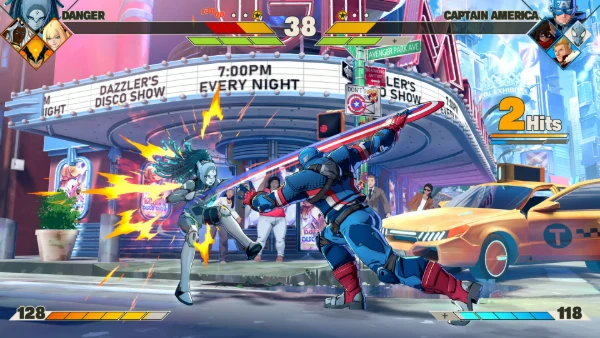
The basic match still resembles a traditional fighting game: two active characters face one another in a side-on arena, using normal attacks, special moves, movement options, throws and defensive techniques to gain control. The difference is that each fighter belongs to a four-character team. The remaining members are not simply waiting for their turn outside the screen. They can become part of an attack through assists and can replace the active fighter through the game’s switching mechanics. A team therefore provides several potential tools at almost every stage of a match. One character might handle close-range pressure, another can provide a useful projectile or long-reaching assist, while a third may be better suited to controlling space. The fourth slot gives players another option rather than forcing every team to depend on a single partnership.
One of the most important differences from many older tag fighters is the way MARVEL Tōkon treats team durability. The four characters operate around a shared health structure rather than giving every team member an entirely separate life bar that must be depleted one by one. This changes the purpose of switching. Bringing another character into the fight is not simply a method of hiding an injured fighter at the back of the team until they recover. Switching is primarily about changing the match-up, continuing pressure, extending a sequence or gaining access to another set of attacks. A player can therefore spend much of a match with a favourite lead character without being forced to cycle mechanically through all four members just to keep the team alive.
The larger team size also does not mean that four characters are constantly fighting on screen at the same time. Most of the action remains readable because one character acts as the main fighter while teammates appear for specific assists, attacks or transitions. This lets Arc System Works create the spectacle expected from a Marvel crossover without turning every round into an uncontrolled eight-character brawl. The design also gives beginners a sensible route into the game. A new player can first learn one reliable character, then add a useful assist, and only later become comfortable with manual switching and more complicated team sequences. At higher levels, however, the same structure allows experienced players to build much longer interactions involving several members of their squad.
Assemble Assists, Character Switching and Team Momentum
The Assemble system is the central link between the four members of a team. Players can call a teammate to perform an assist attack while their current character remains active, allowing two abilities to overlap for a short period. The selected teammate depends on the directional input used with the assist command, so players retain control over which member responds rather than receiving a random partner. An assist can cover an approach, interrupt an opponent’s movement, add another attack to a combo or create enough pressure to make a normally risky action safer. Because each Marvel character brings a different type of support to the team, selecting four fighters is partly about considering what they can do when they are not the current lead.
Direct character switching adds another layer. Instead of simply calling a teammate for one move and sending them away again, the player can bring another member into the active position. This creates opportunities to adapt during a round. If a close-range fighter is struggling against an opponent who controls distance well, switching to somebody with better ranged tools can change the rhythm of the match. A successful assist can also lead naturally into a switch, allowing the incoming fighter to continue an attack. The result is a system where the four-character roster is not just four separate move lists. The important question is how well one character creates an opportunity for the next.
This is where MARVEL Tōkon becomes much deeper than its accessible controls initially suggest. Simple chains and quick inputs make basic attacks relatively easy to perform, but effective team play depends on timing. Calling an assist too early can waste it, while using the right partner at the right moment can extend pressure or help recover control of the screen. Switching also carries more meaning when the incoming character has been chosen for a specific job rather than because the player simply wants to use everybody on the team. Newcomers can therefore treat assists as straightforward support attacks, while experienced players can build planned sequences in which the lead, assist and incoming fighter perform distinct parts of the same offensive idea.
Building a Four-Character Team from the 20-Fighter Launch Roster
MARVEL Tōkon: Fighting Souls launched with 20 playable characters divided into five themed groups of four. The Fighting Avengers consist of Captain America, Iron Man, Hulk and Black Panther. The Unbreakable X-Men bring together Storm, Magik, Wolverine and Danger. Spider-Man, Ms. Marvel, Star-Lord and Peni Parker form the Amazing Guardians, while Doctor Doom, Magneto, Green Goblin and Carnage make up the Knights of Doom. The fifth group, the Samurai Outriders, combines Ghost Rider, Blade, Loki and Deadpool. These groups have a role in the game’s story, but players are not required to keep the official teams together in ordinary battles. Characters from different groups can be combined to create custom four-member squads.
That freedom is particularly important because the characters are deliberately different from one another. Captain America offers an approachable set of familiar fighting-game fundamentals, while Iron Man can use technology and ranged attacks to influence more of the screen. Wolverine is naturally suited to aggressive close-range combat, whereas Storm can make greater use of elemental attacks and movement. Peni Parker fights with SP//dr and an assortment of technological tools, and characters such as Magneto or Doctor Doom introduce their own ways of controlling space. The objective is not simply to select four individually strong fighters. A useful team should give the player several answers to different situations and, ideally, assists that complement the character who spends the most time in front.
The size of the launch roster creates a considerable number of possible combinations without requiring the player to understand all 20 characters immediately. Someone who prefers direct attacks can construct a squad around physically aggressive characters such as Wolverine, Hulk or Black Panther. Another player might prefer ranged pressure and build around characters whose attacks can cover larger sections of the arena. It is also possible to choose characters primarily because their assist functions improve the lead fighter’s game plan. This makes team building a gradual process. A player may begin with four favourite Marvel characters for purely personal reasons and then replace individual members as they learn which assists, ranges and movement styles suit the way they actually play.
Why Character Order, Synergy and Stage Control Matter
Choosing the four characters is only the first part of team building. The lead character matters because that fighter establishes the opening pace of the match and gives the player the tools they will initially rely on most heavily. A comfortable lead can make the early stages much easier to manage, especially for somebody still learning the game. The other positions can then be selected with their assist value in mind. One teammate might help the lead approach safely, another could cover an area the lead struggles to control, and a third may be useful when the player wants to switch into a different style of offence. This approach makes a four-character team feel organised rather than simply crowded with recognisable names.
Stages can also influence the rhythm of battle. MARVEL Tōkon includes locations inspired by the Marvel universe, and some arenas contain transitions that move the fight into another section. These are not presented only as decorative cut-scenes. Stage movement can become part of the flow of a match, reinforcing the game’s emphasis on momentum and large-scale comic-book action. Locations such as Marvel’s New York, Wakanda, Knowhere, the X-Mansion and the Savage Land also give fights strong visual identities without changing the basic need to understand spacing, movement and the opponent’s options. Players who concentrate only on long combos can easily overlook how important it is to control where those exchanges begin.
The best team combinations therefore depend on more than raw damage. Consistency, assist coverage and the ability to handle several ranges can be more useful than assembling four characters whose individual attacks look powerful in isolation. A short, reliable sequence that leaves the player in a favourable position may be more valuable during a real match than a difficult training-room combo that rarely starts successfully against an opponent. MARVEL Tōkon gives players plenty of room to experiment because the fourth character creates an additional support slot compared with many three-on-three fighters. The extra choice can be used to reinforce an existing strategy or to add a character who solves a specific weakness in the rest of the squad.
What the PC Version Offers in 2026
On PC, MARVEL Tōkon: Fighting Souls is available through Steam and the Epic Games Store. The PC release includes single-player content, local versus play and online competition alongside the complete launch roster. Online options include ranked and casual matches, private room matches and an online lobby that can accommodate up to 64 players. Cross-platform multiplayer is also listed for the PC version, helping keep the online player pool from being limited to a single storefront. A PlayStation account and an internet connection are required for online features such as the lobby, ranked matches, casual matches, private rooms and player profiles, while the game also contains a substantial selection of modes that can be played offline.
Those offline options are particularly useful for players who want to understand the 4v4 systems before competing online. Training Mode lets users practise individual characters, assists and combinations under controlled conditions. Character Guides provide another route into the roster, while local Versus supports matches against another player on the same system. Episode Mode adds story-driven content built around the game’s new interpretation of the Marvel universe, with its narrative presented through motion-comic sequences that combine influences from American comics and Japanese manga. All-Star Arena and Arcadia Rumble broaden the selection further, with Arcadia Rumble also available offline while offering optional online elements.
The PC version supports both traditional and quicker input options, so players are not required to approach it with years of fighting-game experience. The simplified route makes it easier to perform useful attacks and chains, while traditional controls remain available for players who prefer more direct control over their inputs. A DualSense controller is supported on PC with compatible features, but the game’s fighting structure is not built around one particular control method. Keyboard users, conventional controller players and fighting-stick users can choose an arrangement that suits them. What matters more is becoming comfortable enough with movement, attacks and assist commands that team decisions can be made without having to think about every individual button press.
PC Requirements, Performance and Where to Start
The official minimum PC specification calls for Windows 11, 16 GB of RAM, an Intel Core i5-8400 or AMD Ryzen 5 1600X processor and either an Nvidia GeForce RTX 2060 with 6 GB of video memory or an AMD Radeon RX 6600 XT with 8 GB. The game requires 27 GB of available storage. The recommended specification keeps the 16 GB memory requirement but moves to an Intel Core i7-8700 or AMD Ryzen 5 3600X processor, paired with an Nvidia GeForce RTX 3070 8 GB or AMD Radeon RX 7600 XT 16 GB. Arc System Works lists support for 4K output on compatible displays, while actual battles run at a locked target of 60 frames per second. For a fighting game, maintaining that stable battle frame rate is particularly important because attacks, animations and input timing are designed around consistent match speed.
For somebody starting in 2026, the most productive approach is not to learn four complicated characters at once. Selecting one comfortable lead and spending time with that fighter’s normal attacks, movement and basic special moves establishes a foundation much faster. The next step is to understand what each of the three teammates contributes as an assist. Once those calls feel natural, manual switching can be introduced without turning every match into a memory exercise. Training Mode is especially useful here because an assist can be tested against repeatable situations until its purpose is clear. After that, experimenting with different members of the 20-character roster becomes much easier because the player already understands what they are looking for in a teammate.
MARVEL Tōkon: Fighting Souls ultimately uses its 4v4 idea to provide more choices rather than simply demanding four times as much knowledge from every player. A newcomer can rely heavily on a favourite Marvel character and straightforward assists, while somebody pursuing more advanced play can study team order, switching routes, assist timing, pressure sequences and character-specific combinations. That range is the main reason the four-member format works. The game retains the recognisable one-on-one tension of a fighting game while allowing other heroes and villains to influence almost every exchange. On PC, the combination of training tools, offline modes, online competition and a 20-character launch roster gives players enough room to learn the system gradually before deciding how deeply they want to explore its team mechanics.