Star Wars Zero Company on Xbox: How Turn-Based Tactics Move the Clone Wars into a New Genre
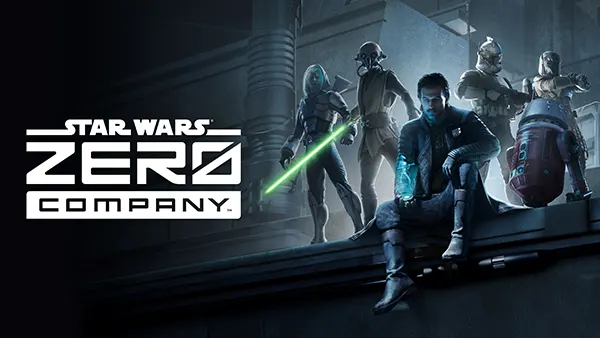
Star Wars Zero Company arrived on Xbox Series X|S on 27 August 2026 with an approach that feels markedly different from the lightsaber duels, third-person adventures and large-scale battles usually associated with modern Star Wars games. Developed by Bit Reactor in collaboration with Electronic Arts and Lucasfilm Games, it is a single-player turn-based tactics game set during the final period of the Clone Wars. Instead of relying on quick reactions, players command a small team, decide where each member should move, select targets and abilities, and prepare for enemy responses. The result is still recognisably Star Wars, with clone troopers, Jedi, Mandalorians, battle droids and familiar planets, but the conflict is seen from the perspective of a commander responsible for keeping an unconventional group alive. That change in viewpoint is central to Zero Company: the Clone Wars become less about watching armies collide and more about deciding what four people should do when a mission starts going wrong.
Why the Clone Wars Work So Well as a Turn-Based Tactics Setting
Zero Company takes place during the twilight of the Clone Wars, when the Galactic Republic and Separatist Alliance are locked in a conflict that has spread across much of the galaxy. The main character is Hawks, a former Republic officer who now leads a group of specialists for hire. Republic Intelligence recruits the company to investigate a threat operating behind the larger war: the Infinite Coil, a Separatist-aligned organisation led by Kundri Fathom. By the time the campaign begins, Hawks and the other Operators are dealing not simply with battlefield assignments but with a hidden conflict involving intelligence gathering, sabotage and operations that conventional military units are poorly suited to handle.
This smaller scale gives the familiar era a different character. Zero Company does not try to replace the major battles and political events already associated with the Clone Wars. Its story occupies the spaces between them, following people whose loyalties and backgrounds do not fit neatly into Republic-versus-Separatist lines. The roster includes former Republic personnel, a Jedi Padawan, a Mandalorian, an Umbaran sniper, criminals and other recruits with their own reasons for joining Hawks. That mixture makes sense in a campaign built around covert assignments because the player is not commanding another standard clone battalion. Zero Company is deliberately irregular, and the game uses those differences to create both tactical options and disagreements between squad members.
Star Wars has used strategy before, so Zero Company should not be treated as the franchise’s first strategic game. What changes here is the focus. Large-scale strategy normally asks players to manage armies, fleets, territories or production. Zero Company brings the camera much closer. A single position behind cover, a wounded Operator or a missed opportunity to stop an advancing enemy can matter more than the size of an army elsewhere in the galaxy. That makes the Clone Wars unusually suitable for this type of game. The setting supplies recognisable weapons, factions and military situations, while the turn-based structure gives individual soldiers more importance than they would normally have during a large cinematic battle.
Every Turn Turns Familiar Star Wars Action Into a Decision
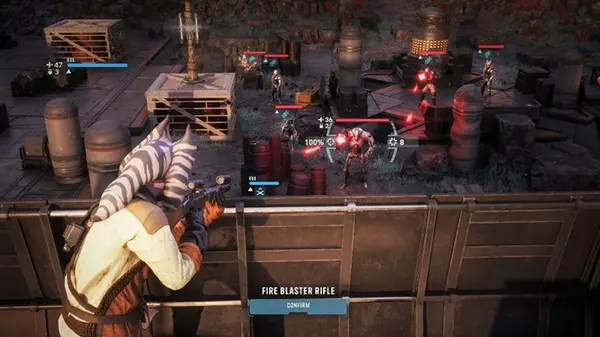
Combat is easy to understand at its basic level. During a Tactical Mission, the player’s entire squad takes its turn and the opposing side acts afterwards. Each Operator receives three Action Points that can be spent on movement, attacks, abilities and other actions. Travelling farther can require additional points, while different weapons also have different costs. This means a character does not simply move once and shoot once. An Operator might fire first and retreat into cover, move to gain a clearer angle before attacking, or preserve the final part of the turn for a defensive action. The system encourages players to think about the order in which the whole squad acts rather than treating every character independently.
Cover and Overwatch make those choices more important without making the game unnecessarily complicated. Partial and full cover reduce the likelihood of an Operator being hit, while moving around an enemy position can create a better shooting angle. Overwatch allows an Operator to watch a selected area and fire during the enemy turn when a target enters or acts within it. There is also a shared resource called Advantage, earned during combat and spent on stronger abilities. Because Advantage belongs to the squad rather than a particular individual, it creates another decision: one character can spend it immediately, or the player can save it for an ability that may be more valuable later in the same encounter.
The risk becomes more personal when Operators are injured. A character reduced to zero health is Downed and can be Rallied by another squad member, but being Downed causes an Injury. On the standard rules, accumulating three Injuries can permanently kill an Operator. Permadeath is enabled by default, although players can turn it off if they prefer a less punishing campaign. Hawks is treated differently because the story depends on the commander: if Hawks dies during a mission, the mission fails and must be restarted. These rules give firefights weight without forcing every player into the harshest possible version of the game. Someone new to turn-based tactics can reduce the consequences, while experienced players can keep permanent losses in place.
Zero Company Makes the Squad the Centre of the Campaign
Hawks acts as both commander and the player’s main personalised character. Appearance, first name, clothing, species and combat specialisation can be adjusted, allowing the same basic protagonist to look and play differently between campaigns. Alongside Hawks are Authored Operators who enter the story with established identities. Trick is a clone trooper who served with Hawks in the Republic military, Tel-Rea Vokoss is a Tognath Jedi Padawan, Cly Kullervo is connected to the ancient Mandalorian Clan Verminoth, Luco Bronc is a sniper who fought to defend Umbara, Jae Mordant is a former Ore-Baroness, and Kabb Uppercut is a prizefighter and veteran criminal. Their contrasting histories provide the campaign with perspectives that a conventional Republic squad could not offer.
Players can also recruit Custom Operators rather than relying entirely on the authored cast. These recruits can be altered in areas such as appearance, name, clothing and combat role, giving the player room to create a company that reflects a preferred style. The standard deployed squad can contain up to four Operators, although some missions allow additional characters to be controlled. Zero Company’s overall roster is larger: players begin with limited capacity and can increase it through progress and improvements at the Den. Clone Troopers and astromechs can also become recruitable, making unusual squad combinations possible instead of forcing players to maintain a conventional mixture of character types.
The important part is that squad composition affects more than weapon selection. Operators develop Bonds as they work together. Missions, assignments and support actions can improve relationships, while some campaign decisions can affect how individual characters feel about Hawks or one another. Stronger Bonds can eventually produce Cross Training benefits that improve the linked Operators in combat. As a result, repeatedly pairing two useful characters has a practical consequence beyond hearing more dialogue between them. The game ties personal relationships to tactical performance, which is an effective way of making the people inside the squad matter even when the campaign moves away from story scenes and back into combat.
The Den Gives the Campaign a Life Between Battles
Zero Company’s base is the Den, located in a large hangar on the Ring of Kafrene. It acts as the point where the tactical missions and the wider campaign meet. The perspective changes here, allowing Hawks to move through the base in third person and speak with members of the company. Different facilities handle recruitment, equipment, personnel development, injuries and improvements to the organisation. The Den therefore gives the campaign a rhythm that is different from simply completing one battle after another. Returning from a mission can mean dealing with wounded Operators, changing a squad member’s equipment, recruiting someone new or deciding which improvement should receive the company’s limited resources.
The Holotable is where the player chooses what Zero Company will do next. Operations and Tactical Missions serve different purposes. Tactical Missions place a deployed squad directly into turn-based combat, while Operations are strategic assignments that can provide Credits, equipment, information or narrative events without requiring a full battlefield encounter. Operations consume Intel earned through Tactical Missions, so it is not possible to accept everything without considering priorities. Some opportunities also expire as the campaign progresses. Story-critical missions eventually have to be completed, but optional assignments compete for the player’s attention and resources before that point arrives.
The scale behind these choices is larger than the four-person battles suggest. Bit Reactor has said that the Galaxy Map contains more than 150 planets where strategic Operations can potentially occur, while Tactical Missions take place across more than a dozen detailed planets. Confirmed locations include Bespin, Dantooine, Lothal and Ryloth. This does not mean the player physically visits every world on the map; many planets are used for strategic decisions rather than full combat areas. That distinction is important. Zero Company creates the sense of a galactic conflict without turning every destination into a large level, while the locations selected for Tactical Missions receive the more detailed treatment needed for cover, objectives and squad combat.
What Xbox Players Get from the 2026 Release
On Xbox, Star Wars Zero Company is made specifically for Xbox Series X|S rather than Xbox One. The current Xbox Store listing identifies support for 4K Ultra HD, HDR10 and frame rates of 60 fps or higher, alongside Xbox achievements, presence features and cloud saves. It remains entirely a single-player game. There is no competitive multiplayer, online co-op, local co-op or split-screen mode, so an internet-based squad mode should not be expected. That focus suits the design: the campaign is built around one player controlling the whole company, managing its members between operations and making tactical decisions for every Operator on the battlefield.
As listed on the UK Xbox Store at the end of August 2026, the Standard Edition costs £49.99 and the Deluxe Edition £59.99. Both contain the base game, while the additional Deluxe content is cosmetic rather than a separate campaign or essential gameplay expansion. Its extras draw on groups and military designs from the Clone Wars era, including Grand Army of the Republic and Shadow Collective-inspired items together with additional weapon appearances. That distinction matters for buyers comparing the two editions: the central missions, characters and tactical systems are not presented as features reserved for the more expensive version.
Bit Reactor estimated before release that an average player would need roughly 30 to 40 hours to complete the main story, depending on difficulty and familiarity with strategy games. There is no New Game+ mode at launch, although certain customisation items can become available on later playthroughs. The campaign also gives players some control over how demanding it becomes. Permadeath can be disabled, while different squad compositions and mission choices allow another campaign to develop differently even though the main story follows a largely fixed overall direction. Decisions can alter Bonds and some individual story moments, but players should not approach Zero Company expecting a role-playing game with completely separate endings.
Why Zero Company Can Work for Players New to Tactical Games
The strongest reason Zero Company can appeal beyond established strategy fans is that its rules are attached to familiar Star Wars ideas. Cover is not an abstract statistic when a clone trooper is sheltering behind a wall from battle-droid fire. Overwatch is easy to understand when it means asking a squad member to guard a corridor while another Operator moves towards an objective. Force abilities can move enemies out of safe positions, explosives can remove cover, and astromechs can fulfil useful battlefield roles rather than acting only as background characters. The Star Wars setting gives visual meaning to systems that might otherwise look intimidating to someone who rarely plays turn-based games.
At the same time, the game does not reduce every mission to eliminating all enemies from a map. Confirmed mission types include combat, sabotage, rescue and retrieval, together with narrative missions built around particular characters. Some story missions also contain short third-person sections before turn-based combat begins. These sequences can provide additional Intel or Advantage before the encounter and help connect the cinematic story to the tactical layer. Different objectives also discourage one repetitive strategy. Defending an area may reward careful Overwatch placement, while a sabotage mission that requires planting explosives and escaping forces the squad to keep moving.
For Xbox owners considering Zero Company, the key question is therefore less about knowledge of complex strategy terminology and more about preferred pace. It is not designed around continuous real-time action. A firefight pauses long enough for the player to consider positions, abilities, injuries and the next enemy turn. Players who mainly want direct lightsaber combat or a fast shooter will find a very different kind of Star Wars game here. Those interested in squad characters, Clone Wars stories and decisions that make individual soldiers valuable have a clearer reason to try it. Zero Company uses turn-based tactics not as a cosmetic change to familiar action, but as the structure through which its version of the Clone Wars is told.