Hollow Knight: Silksong — a New Challenge for Metroidvania Fans
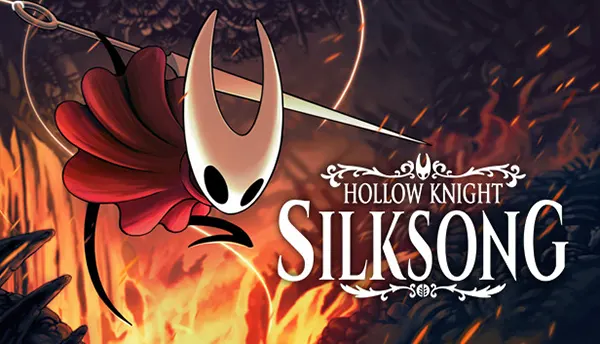
Hollow Knight: Silksong has remained one of the most anticipated Metroidvania titles of the decade. By 2025, confirmed information from Team Cherry shows that the game has evolved far beyond a direct continuation and presents a refined vision of movement, exploration, and combat. This article provides a detailed overview of the project’s mechanics, development state, artistic direction, and the reasons why long-time players view Silksong as a fresh test of skill in the genre.
The Expanded World of Pharloom
Pharloom is the new kingdom where events unfold, and according to officially shared developer insights, it is designed with a stronger vertical progression than Hallownest. Each region integrates handcrafted route complexity, traps, and biome-specific hazards that influence the pace of travel. This means players must adapt to a larger number of traversal challenges compared with the original game.
The artistic style follows the hand-drawn approach Team Cherry is known for, but regions in Pharloom feature sharper contrasts, busier backgrounds, and more aggressive colour palettes. This shift supports Hornet’s dynamic movement, allowing visual clarity during fast manoeuvres. The 2025 previews emphasise an even greater emphasis on environmental storytelling, with animated objects and micro-details guiding the player naturally.
Developers have confirmed that NPC density has increased. Many characters offer multi-stage interactions, side objectives, or resource exchanges. This approach aims to create a living world where the player feels the consequences of earlier decisions, making progression less linear while preserving the core Metroidvania structure.
Level Design Depth and Mechanical Structure
Silksong’s routes include more layered shortcuts, looping corridors, and skill-based vertical routes. This level design philosophy supports Hornet’s speed, balancing precision with rhythm. Several areas encourage creative use of momentum, allowing players to chain jumps, slides, and needle-based actions without abrupt transitions.
Puzzle elements have matured compared with the original game. Levers, pressure switches, mechanical traps, and enemy-triggered events appear more frequently. These elements align with the narrative of a kingdom driven by clockwork and ritual, giving the setting a distinct identity. Importantly, these puzzles never halt gameplay; they reinforce situational awareness.
Enemy distribution is also more considered. Instead of isolated encounters, foes often appear in formations that force players to engage in movement-heavy exchanges. Combat rooms in Silksong reward consistency, timing, and spatial control, further defining its role as a game built around agility rather than endurance.
Hornet’s Evolved Combat and Mobility
Hornet is significantly faster than the Knight, and this influences every system in Silksong. Her needle and thread mechanics allow extended range, airborne repositioning, and grapple-like manoeuvres. These tools are not only combat features but also essential for navigating the environment with efficiency.
The healing system has undergone major adjustments. Hornet can perform a rapid Stitch during combat, but this option requires careful timing and exposes the player to risk. Unlike the Knight’s methodical healing, this mechanic encourages offensive rhythm and rewards players who maintain pressure on enemies rather than retreat.
Crafting is a major addition. Materials collected from enemies and chests allow the creation of new tools, traps, and improvements. This system does not replace badges (now known as tools) but supplements them, offering a broader range of customisation without undermining the purity of skill-driven gameplay.
Boss Philosophy and Combat Identity
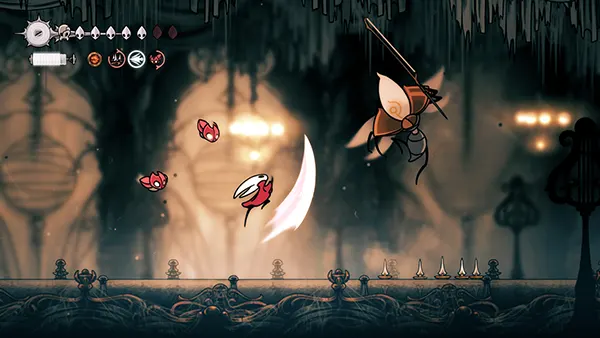
The bosses in Silksong are designed to match Hornet’s speed. Early developer footage shows encounters with wide attack patterns, multi-phase transitions, and minimal downtime. Each boss encourages a mix of mobility, counter-aggression, and resource planning.
Several bosses use environmental elements such as walls, spikes, elevated platforms, and moving hazards. These mechanics increase the pressure on the player to maintain constant awareness and adapt instantly. The result is a combat experience that feels fluid and reactive, rather than rigid or pattern-based.
By 2025, Team Cherry’s official communications confirm that boss count exceeds that of the original game at launch. This expansion supports long-term replayability and offers diverse technical challenges, appealing to fans who appreciate mastery-focused design.
Progression, Difficulty Curve, and Release State
Progression in Silksong emphasises milestones linked to exploration and completion of optional tasks. Tools unlock new strategies and paths, while challenges scale fairly without resorting to artificial difficulty spikes. This design ensures that players improve through skill rather than grinding.
The difficulty curve has been carefully adjusted. According to public commentary from the developers, the early game introduces mechanics with clarity, but mid-to-late areas require strong reflexes and decision-making. This approach makes Silksong more demanding than its predecessor but never unfair.
Regarding release status, Team Cherry has not published a final date as of 2025, but the project remains in active development with verified updates through public channels. The studio continues to refine content quality, which explains the prolonged timeline. Despite the extended wait, the available data suggests a highly polished experience that aligns with the expectations formed around the original Hollow Knight.
Community Expectations and Genre Influence
The Silksong community remains engaged due to the original game’s reputation for depth and craftsmanship. Many players anticipate a title that respects their time by providing meaningful progression, sophisticated mechanics, and a distinctive atmosphere.
The Metroidvania genre has expanded significantly in recent years, but Silksong stands apart due to its emphasis on precision movement, layered exploration, and strong world-building. These factors position it as a future reference point for design practices in the genre.
Ultimately, Hollow Knight: Silksong continues to represent one of the most ambitious independent projects of the decade. Its approach to combat, exploration, narrative, and world design aims to elevate expectations of what modern Metroidvania games can achieve.